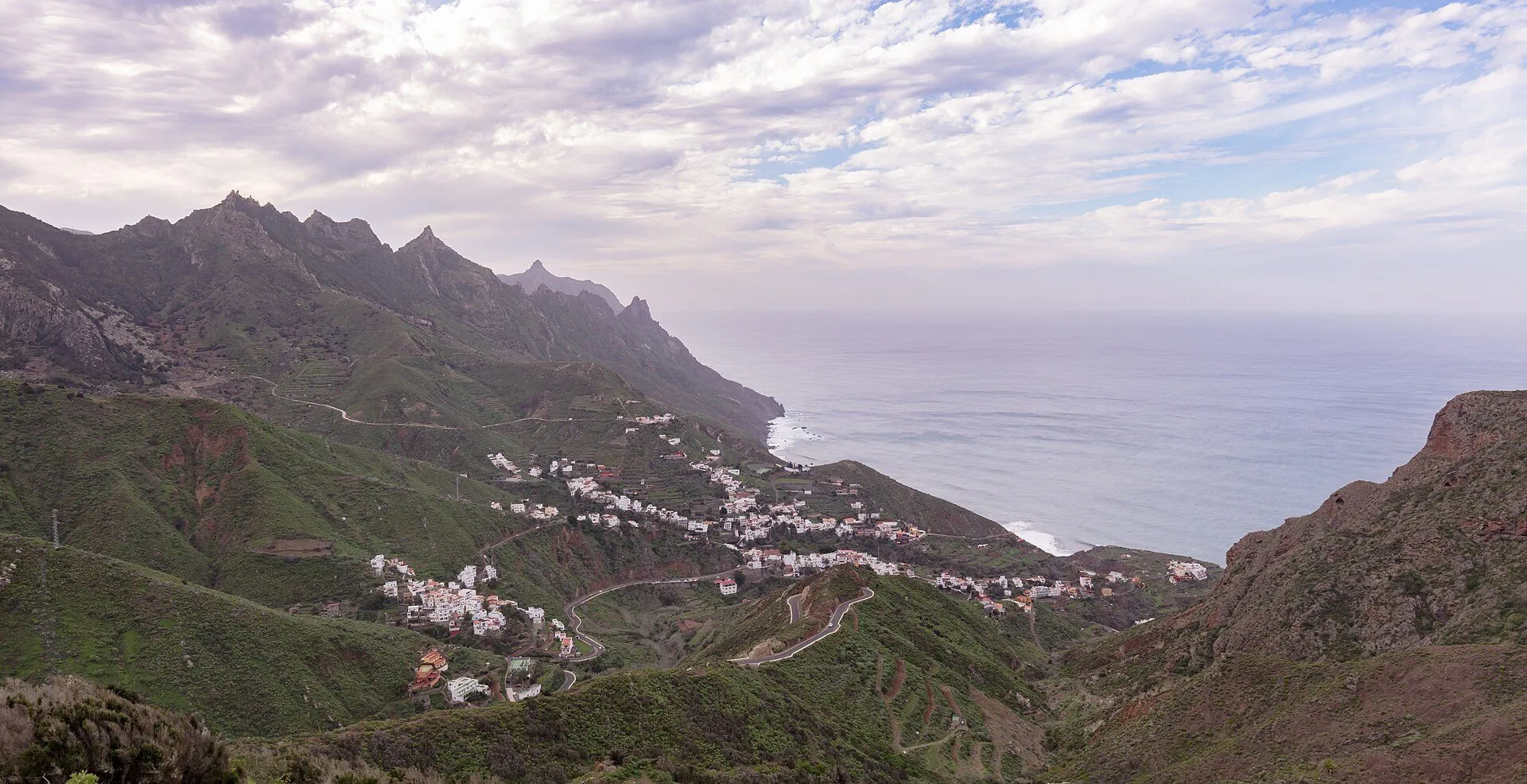
The island of eternal spring: Teide volcano, Spain's highest peak, with its cable car and moonlike scenery; Loro Parque and Siam Park, among the best parks in Europe; the cliffs of Los Gigantes with whale and dolphin trips; and the village of Masca in its valley.
When to go
All year round (around 22–28°), excellent in winter
The largest of the Canary Islands and home of the summit of “Teide”, Spain's highest mountain. The Guanches lived here until the Castilians completed their conquest in 1496 CE. Santa Cruz repelled Nelson's attack in 1797 CE.
Figures of Tenerife
d. 1494
Bencomo
A Guanche chief (mencey) who led the resistance against the Castilian conquest; there is a statue of him in Candelaria.
1456–1525
Alonso Fernández de Lugo
The Castilian conqueror of La Palma and Tenerife, and the founder of La Laguna.
1758–1824
Agustín de Betancourt
An engineer and inventor born in Puerto de la Cruz, who worked in the service of the Russian tsar and built structures in Saint Petersburg.
1769–1859
Alexander von Humboldt
The German scholar visited Tenerife in 1799 and climbed Teide, and a viewpoint in the Orotava valley bears his name.
Chapter Two
Places in Tenerife
68 places I chose, arranged in chapters. A gold star marks one of my favourite picks.
Heritage and monuments
1
01
Pirámides de Güímar
· Güímar
Six stepped stone platforms in an ethnographic park, famous after the explorer Thor Heyerdahl linked them to the pyramids of the ancient world. Around them is a botanical garden and an exhibition about his expeditions.
Easy to reach · needs a car
Level paths in a garden; suitable for strollers.
My tip
Take the audio guide and allow an hour and a half; it is useful for children who like exploring. 25 minutes from Santa Cruz.
A famous rural “guachinche”: home-style Canarian cooking on a family farm in the north of the island; lunch Monday–Friday.
The guachinche is an authentic Tenerife tradition: farms open their homes to serve home cooking at low prices. This is one of the most famous and best loved by islanders.
Try“Papas arrugadas” with mojo sauce, cooked goat, grilled chicken, gofio
Booking advised · Suits families and children, couples and friends and groups
Teide volcano, the highest peak in Spain (3718 m), in a huge crater of lava fields and coloured rocks that look like the surface of Mars. It is the most visited national park in Europe and part of the World Heritage.
Moderate effort · needs a car
By car or on bus 342 (one trip a day). The cable car needs a booking and stops in strong wind; the summit needs a permit. Altitude 2,300–3,700 m: cold and altitude dizziness, unsuitable for heart patients. A few cafés at the station.
My tip
Take warm clothes even in summer; the final summit climb needs a free permit, booked weeks in advance.
A golden beach with sand brought from the Sahara in the 1970s, protected by breakwaters, with completely calm water, below the green Anaga mountains near Santa Cruz de Tenerife. The water is mild all year (19–23°C), so it suits swimming in winter too.
My tip
One of the best beaches in the Canaries for children because of its calm water. Free parking, sunshades and showers. Bus 910 from Santa Cruz reaches it in 15 minutes.
The humid, evergreen “laurisilva” forest in the heart of La Gomera, a living remnant of the Tertiary forests that covered southern Europe millions of years ago; a UNESCO World Heritage site, wrapped in fog so it looks like a legendary forest.
Moderate effort · needs a car
Ferry from Los Cristianos, then a rented car (buses are few). The viewpoints and short trails are by the road; the long trails are steep and muddy. Fog, humidity and cold; a restaurant and visitor centre only in Agulo.
My tip
A 50-minute ferry from Los Cristianos (Tenerife). Start at the visitor centre in Agulo. There is a lot of fog — choose a clear day. Trails for all levels.
It was the most important port in Tenerife until volcanic lava buried it in 1706 CE, and the lava became natural swimming pools called “El Caletón”. The town is one of “Spain's most beautiful villages”, with its square, its convents and the Castillo de San Miguel.
What to see
The El Caletón pools · Castillo de San Miguel · Plaza de la Libertad · Convent of San Francisco · the Garachico sea stack
Easy to reach · needs a car
Rock pools reached by steps over rough volcanic ground; take care with small children. The town itself is flat.
My tip
Swim in the morning when the sea is calm (the pools close when the waves are high), and bring water shoes. Combine it with the dragon tree in Icod (10 minutes).
The oldest and largest “dragon tree” in the world, estimated at 800 to 1,000 years old, and a symbol of Tenerife. Around it is a small botanical garden of Canarian plants.
Easy to reach · needs a car
A garden with slightly sloping paths; suitable for families.
My tip
It can be seen free from the adjacent square; the garden has a token fee. Come in the morning. Combine it with Garachico.
A modern rural hotel built on the terraces of the quiet island of La Gomera, with a spa, a pool and views over the ocean and Tenerife.
Easy to reach
Ferry from Los Cristianos (about an hour) to San Sebastián de La Gomera; the hotel is near the town on the east coast. A car is essential for visiting Garajonay (winding mountain roads).
My tip
Access by ferry from Los Cristianos in Tenerife (about an hour); visit Garajonay National Park and its misty forests.
The first unwalled city planned on a street grid (1496 CE); it became a model for Latin American cities and has been on the UNESCO World Heritage list since 1999. Its pedestrian streets are full of Canarian houses with wooden balconies and courtyards.
What to see
Calle Obispo Rey Redondo and the Casa del Corregidor · Plaza del Adelantado · La Laguna Cathedral · Palacio de Nava · the municipal market · the history museum in Casa Lercaro
Easy to reach
Level centre, mostly for pedestrians and suitable for strollers; tram from Santa Cruz and public parking.
My tip
Stroll along Calle Obispo Rey Redondo and Calle San Agustín, and go into the open courtyards of the mansions; then head for the Anaga forest (20 minutes). The city is cooler and more humid than the south, so bring a jacket.
Towering black volcanic cliffs, up to about 600 m high, drop vertically into the ocean, and are seen at their best from the sea.
What to see
Boat trips below the cliffs and dolphin and whale watching · the Archipenque viewpoint · the harbour · Los Gigantes volcanic beach · the nearby village of Masca
How to get there
TITSA bus from the south (Costa Adeje) (≈1 h) — by car ≈1 h 15 min from Santa Cruz
Easy to reach
Buses from Los Cristianos or by car; the harbour and the viewpoint are a short walk. Boat trips leave directly from the quay. Many restaurants. Seasickness is possible.
My tip
Take a boat trip from the port of Los Gigantes to see dolphins and whales too.
A mountain village perched between the jagged peaks of Teno, reached by a spectacular winding road; according to local legend it was once a hideout for pirates.
What to see
The winding mountain road and its viewpoints · the village and its stone houses · the Barranco de Masca (booking in advance) · Teno Rural Park · the Cherfe viewpoint
How to get there
By car (narrow mountain road); or TITSA bus from Buenavista del Norte
Hard going · needs a car
Very narrow road with sharp bends (bus 355, few services). The valley trail is about 5 km downhill, 650 m, 3–4 hours; official booking and a helmet are compulsory, and return is by boat to Los Gigantes if the quay is operating, otherwise an exhausting climb. The village itself has steep stairs. No signal in the valley.
My tip
The road is very narrow, so drive carefully or go on a tour; the valley trail to the sea needs a booking in advance.
A historic town on the slope of the Orotava valley beneath Mount Teide, with its noble houses with carved wooden balconies. The Casa de los Balcones (1632 CE) is the most famous, with its courtyard and small museum.
What to see
Casa de los Balcones · Jardines de Victoria · the town hall square · the El Ayo mill · views of the valley and Teide
Moderate effort · needs a car
Very steep paved streets; tiring for older people. Public parking at the bottom of the town.
My tip
Enter the courtyard of the Casa de los Balcones, then walk to the Jardines de Victoria and the Liceo gardens; combine it with the climb to Teide on the same road.
One of the most famous zoos in the world. It started with parrots and now holds the largest collection of them, with penguins on real ice, dolphin and seal shows and shark tanks.
My tip
Set aside a full day and plan your tour around the show times; a combined ticket with Siam Park is better value.
A small yacht for eight guests sails towards the pilot whales and the resident dolphins found year-round between Tenerife and La Gomera, then stops under the towering 600 m “Giants” cliffs for swimming and diving. 3 intimate and comfortable hours for families.
Easy to reach
Buses or car to the port of Los Gigantes (paid parking). Board the boat directly from the quay; the trip is 2–3 hours. Seasickness is possible, and trips are cancelled in rough seas.
My tip
Book early because the group is small, and ask for non-alcoholic drinks. The sea is best in the morning; bring swimwear.
Under the enormous cliffs of Los Gigantes, which rise hundreds of metres from the sea west of Tenerife, volcanic dive sites where you can see sea turtles, stingrays and moray eels, with warm water all year round.
Moderate effort · needs a car
From the port of Los Gigantes; parking is difficult in the very steep town. Boat dives with a certification, or a trial course; cancelled in waves.
My tip
The centre is directly in the port of Los Gigantes; closed on Sundays, and a trial dive is available for beginners.
A mountain trail in Tenerife that passes between old almond orchards, which blossom white and pink in winter against the backdrop of Teide. It is the most famous almond-blossom scene in the islands. The almond itself was brought to Spain by the Arabs, and its Spanish name, almendra, bears the trace of that.
Moderate effort · needs a car
Linear route of about 9 km (3–4 hours) from Santiago del Teide to Arguayo, on dirt and stone tracks with gentle slopes. No shade and no water—bring water. Return by taxi or a second car. Peak blossom in February.
Season
Late January – February
My tip
The blossom is between late January and mid-February. The trail is always open and can be shortened, and the area holds an almond festival in February.
A prayer room below the Comodoro Hotel near Los Cristianos beach in the south of the island, which fills up on Fridays.
My tip
Friday prayer is usually at around 13:30 to 14:30, and may run later, up to 15:00, in summer; check with the mosque before going. The sermon is around 14:00–14:30 and the prayer around 15:00, depending on the worshippers. There is a place for women, and parking is difficult.
The only hotel inside Teide National Park (a World Heritage site) at 2,100 m altitude, directly beneath the Teide volcano. A unique experience of volcanic scenery and stargazing.
My tip
The building is old and awaiting renovation; nights are cold even in summer, and the cable car to the summit is 5 minutes away — book the summit permit in advance.
A colonial Canarian-style building on a cliff above the port of San Sebastián de La Gomera, with tropical gardens, a pool and a view of Tenerife and Teide. Very quiet.
My tip
Access by ferry from Los Cristianos (about 50 minutes); there are scattered reports of smells in some corridors, so ask to change the room if needed.
A 17th-century Canarian mansion in the quiet coastal town of Garachico, north of the island, with a pool in the courtyard and a terrace with a view. Refined artistic design and calm service.
My tip
Some rooms have two floors (loft bed), suitable for a family of three. The north is cooler and cloudier than the south.
A historic Canarian mansion in the heart of La Laguna, a World Heritage site, with spacious rooms, some with a small kitchen. A good base for exploring the north and Mount Teide.
My tip
The spa has extra fees and needs advance booking; rooms with a kitchen help families.
A huge resort in the style of Moroccan fortresses on a slope overlooking the ocean and La Gomera, with a large spa with a water circuit, pools and a private beach. One of the most luxurious resorts in the Canary Islands.
My tip
Book the spa with your stay, as it does not allow visits without a prior booking; the villas and imperial suites suit large families.
A modern resort in La Caleta on the Costa Adeje, with suites and villas with private pools and a spa with a thermal circuit. Rated exceptionally by its guests.
My tip
Villas with private pools give the family complete privacy; the “Corales Beach” section is for adults, so book “Corales Suites” if you are travelling with children.
My view in brief: All year round (around 22–28°), excellent in winter. Pick a month to see its weather and events.
Among my best months An event or holidayBars: lowest and highest temperature
January15° to 21°
Permanent spring (15–21°C), and snow sometimes covers the peak of Teide, making it a perfect winter destination. We recommend the Teide cable car with warm clothes.
No events listed in January. A quiet month, and prices are often lower.
Chapter Four
Where to stay in Tenerife
1
Costa Adeje
Costa Adeje
The sunny south of the island all year, with the most upmarket family resorts and the quietest beaches (El Duque and La Caleta), and the Siam Park water park nearby.
You'll find here
5-star resorts with pools and kids' clubs, and villas.
2
Puerto de la Cruz (north)
Puerto de la Cruz
A milder climate and green nature, near Loro Parque and Mount Teide, with the character of an authentic Canarian town.
You'll find here
Classic 4-star hotels at moderate prices.
3
Santa Cruz / La Laguna
Santa Cruz / La Laguna
The capital and the historic city of La Laguna (World Heritage), suitable for shopping and restaurants, and close to the northern airport.
You'll find here
City hotels and apartments.
Where I wouldn't stay
The nightlife strip at Playa de las AméricasLas Américas (zona de ocio nocturno)
Part of Playa de las Américas is full of bars and loud nightclubs; choose the neighbouring Costa Adeje instead.
Hotels I recommend in Tenerife
The Ritz-Carlton Tenerife, Abama ★★★★★
Gran Hotel Bahía del Duque ★★★★★
Chapter Five
What to bring home
What deserves to come home with you from Tenerife: the genuine article, and what carries a protected origin.
IGP
Canary bananas
Plátano de Canarias IGP
A small spotted banana, very sweet and tastier than imported bananas.
DOP
Old Canarian potatoes
Papas antiguas de Canarias DOP
Historic potato varieties brought from the Andes, cooked in their skins in very salty water, “papas arrugadas”, and served with mojo sauce.
IGP
Canarian gofio
Gofio Canario IGP
Roasted grain flour (wheat or maize), the staple food of the island's original inhabitants, mixed with milk, honey or broth.
DOP
Tenerife honey
Miel de Tenerife DOP
Protected honey with rare distinctive varieties, including volcanic “tajinaste” flower honey and “retama del Teide” honey from the high slopes of Mount Teide.
Mojo sauce
Mojo rojo y verde
A hot red sauce of chilli and paprika, and a green one of coriander and garlic, sold packaged as a gift.
Canarian goat cheese
Queso de cabra canario
Soft and smoked goat cheeses from the island's farms; and “Queso Palmero DOP” cheese from La Palma is available here.
Chapter Six
Getting around Tenerife
Tenerife has two airports: the South (TFS), closest to Costa Adeje (20 minutes), and the North (TFN), closest to Santa Cruz and La Laguna. The green “Guaguas TITSA” buses cover the island, the “Ten+” card cuts fares a lot, and a tram links Santa Cruz to La Laguna. But a rental car is almost essential for visiting Teide and the north comfortably. Taxis are available at the airports and in tourist areas, and ride-hailing apps are limited. Tips: going up Teide by cable car requires advance booking, and the weather on the mountain is much colder than on the coast.